
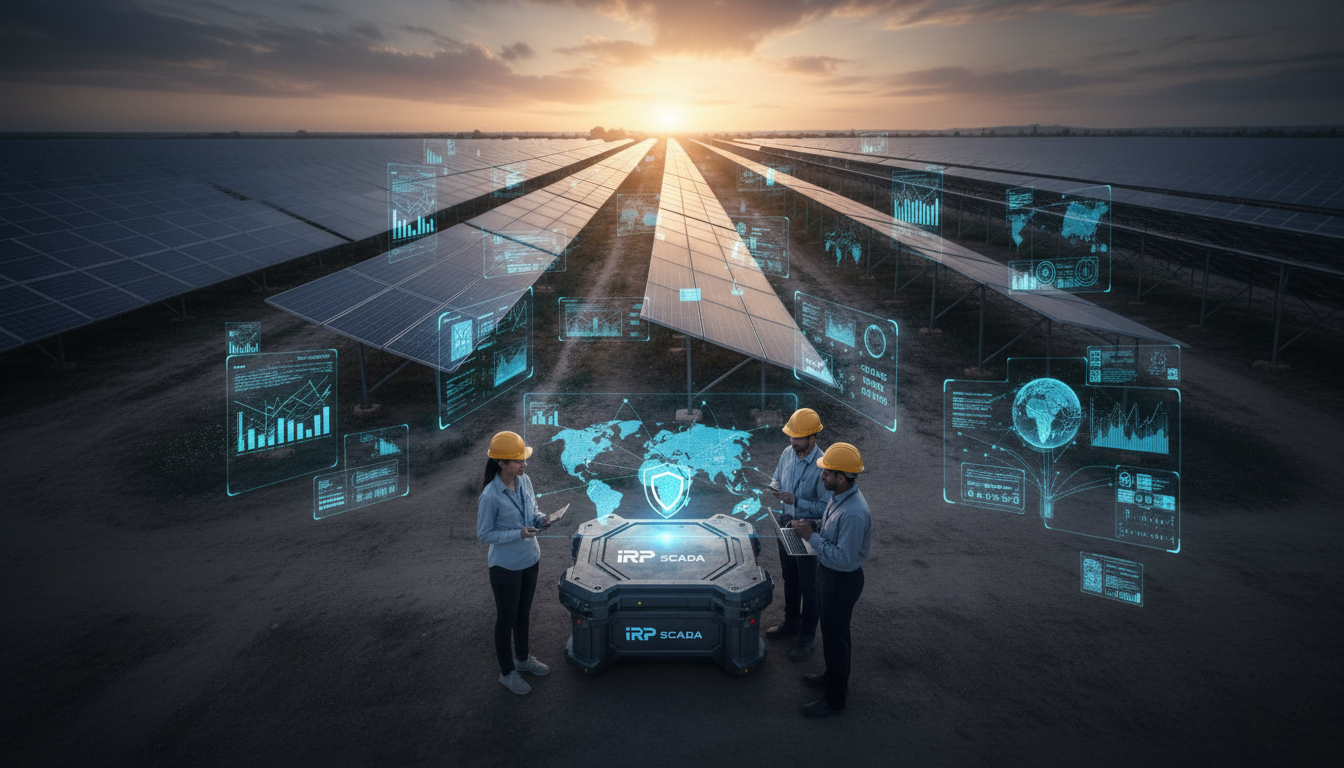
As the world accelerates toward renewable energy, solar has emerged as the backbone of this
transition. But as the scale of deployment increases, so do the challenges — unpredictable
weather patterns, grid instability, equipment degradation, and the constant pressure to optimize
performance. The next leap in overcoming these challenges will not come from adding more
panels or inverters, but from adding more intelligence.
This is where Artificial Intelligence (AI) and Predictive Analytics are shaping the future of
solar power.
From Reactive to Predictive Operations
Traditionally, solar plant management has been reactive — operators respond to faults after
they occur. A module underperforms, an inverter trips, or a sensor fails, and the issue is
addressed once it’s visible on the dashboard. While SCADA systems revolutionized monitoring
by providing real-time data, the next evolution lies in transforming this data into foresight.
With AI-driven predictive analytics, solar plants can now anticipate failures before they happen.
Algorithms analyze years of operational data — temperature patterns, inverter efficiency,
irradiance fluctuations, and fault histories — to identify subtle warning signs. What used to take
human operators hours or days to detect can now be predicted within minutes.
This shift from reactive to predictive maintenance not only reduces downtime but also extends
equipment life, optimizes workforce deployment, and significantly lowers O&M costs.
The Role of Data in Intelligent Solar Operations
A modern solar power plant generates millions of data points every day from inverter output
and string current to module temperature and grid frequency. On their own, these numbers
mean little. But when processed through machine learning models, they tell a powerful story
about the health, efficiency, and future performance of the plant.
Predictive analytics uses this continuous stream of data to identify deviations from normal
behavior. For example, if an inverter’s efficiency starts to decline slightly compared to others
under the same irradiance, the system flags it before it causes measurable energy loss. Over
time, AI models learn to recognize such anomalies automatically, allowing for early intervention.
The more data a system processes, the smarter it becomes constantly refining its
understanding of how a particular plant behaves under specific environmental conditions.
AI-Powered Decision Making in SCADA Systems
The integration of AI within SCADA platforms marks a new era in solar operations. Instead of
being static dashboards, next-generation SCADA systems are evolving into decision-making
engines.
AI algorithms can:
- Optimize inverter loading based on weather forecasts.
- Adjust grid response dynamically to prevent curtailment.
- Recommend cleaning schedules using soiling pattern detection.
- Predict how external events — like heatwaves or dust storms — will impact generation.
In other words, AI transforms SCADA from a monitoring tool into an autonomous control
system capable of adapting to real-world conditions in real time.
Creating the Intelligent Solar Plant of the Future
The combination of AI, IoT, and predictive analytics is giving rise to the self-learning solar
plant one that can monitor itself, predict performance changes, and optimize output
automatically. Such plants will require fewer manual interventions, operate with near-perfect
uptime, and maintain compliance across rapidly evolving grid standards.
Infrared Power’s innovation philosophy is built around this vision. By integrating AI-ready
architecture within IRP SCADA, we are preparing solar operators for a future where intelligence
drives every aspect of energy management from generation to grid interaction.
As solar power continues to expand globally, the difference between good and great
performance will come down to how well data is understood, anticipated, and acted upon. AI
and predictive analytics make that difference transforming raw data into strategic intelligence.
The future of solar energy isn’t just renewable; it’s intelligent.
